
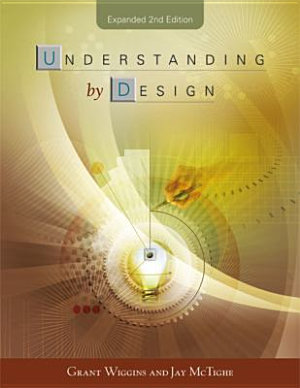
I first learned about unpacking standards and backward design as a curriculum developer. But it wasn’t until I became a teacher that I truly appreciated the power of this method. Seven years ago, a mid-life career shift from writing history to teaching history, I found myself teaching students who hated history. My students told me that they disliked history because they felt it had no connection to real life. The more I dug into this belief, the more I uncovered the teaching methods that had led them to that conclusion: an emphasis on names and dates, facts and figures. Where were the big ideas? Why had they never been introduced to the idea of history as a power struggle, or a narrative with many points of view?
My students had not been introduced to those ideas because they studied history with teachers who hadn’t used backward design. Backward design turns learning upside down. It starts with the concepts and big ideas that make learning meaningful. When I focused on history as a struggle between the haves and have nots, my students stopped seeing history as dry facts about a long ago past, but an ongoing story whose themes about power and privilege are still being played out to this day.
Backward design starts with questions: “Why were Europeans able to come to the Americas and decimate the Native American population instead of the other way around?” Once teachers and students start asking questions, breathing curiosity and exploration into every stage of learning, it transforms students from passive recipients of learning (memorize this fact, spit it back on a test) to active learners, detectives of, in my classes, history, literature and writing. My students know that we ask questions of everything. How does Scout’s view of the world change by the end of To Kill a Mockingbird? Why is conflict vital in narratives? How can it turn my stories into page turners?
Once the focus of curriculum is questions, it pushes teachers and students to prioritize the acquisition of skills over the acquisition of information. It’s not that I don’t want my students to understand certain facts or bodies of knowledge, I do, but I also recognize that while they are likely to forget those facts, prioritizing the acquisition of skills means that they will still remember how they dug out their answers long after they have forgotten the content of those answers. In other words, once they know how to learn, they can learn about whatever they want or need to learn from now to the end of their lives.
When I start with what I want my students to be able to do, rather than what l want to teach them, it helps me be creative about assessments and learning experiences. When I shift away from thinking about how to feed information in and instead focus on outcomes, it helps me come up with active learning opportunities. For example, instead of testing my 8th graders on what they memorize about Columbus, asking them to mount a defense at trial and then write about the trial not only pushes them to apply and synthesise what they learn, it’s so much more fun!
I am a huge fan of backward design. It enables me to focus on the big ideas that make learning relevant, and pushes me to design assessments and activities that are active, meaningful and fun. When learning is all of those things, students realize that school is just one place, not the only place, where learning happens. That’s a big idea I want my students to think about as they leave middle school for high school, or high school for college and beyond.
Source:
Wiggins, G. P., & McTighe, J. (2008). Understanding by design. Alexandria, VA: Association for Supervision and Curriculum Development.
 WENDY FREY